TECHNICAL FOUNDATION
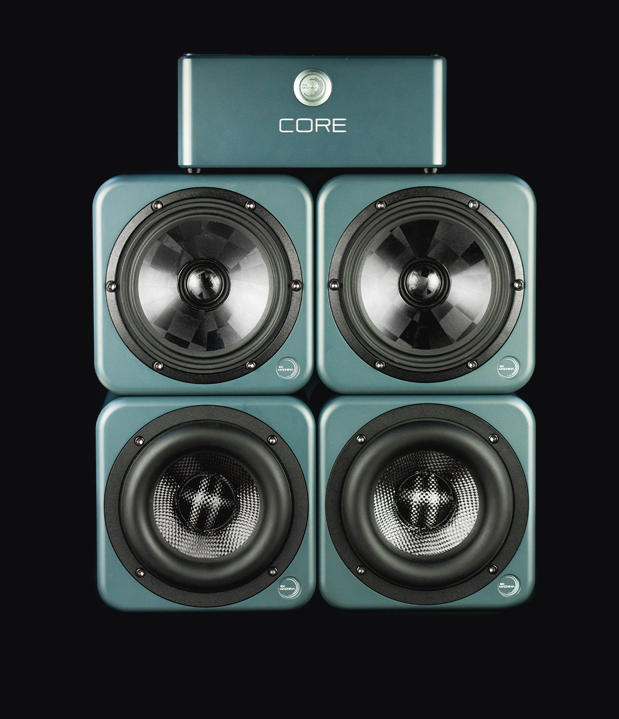
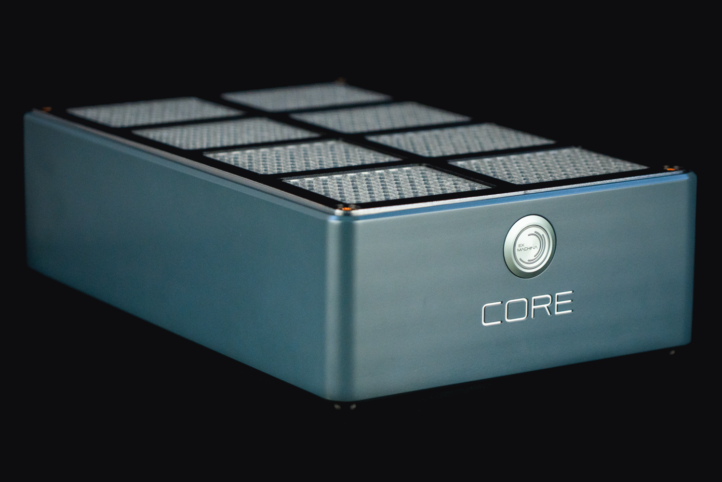
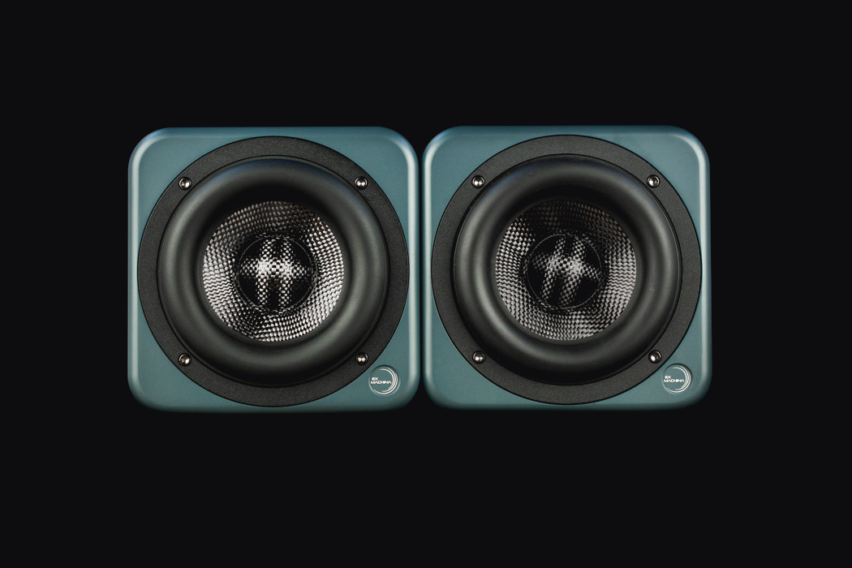
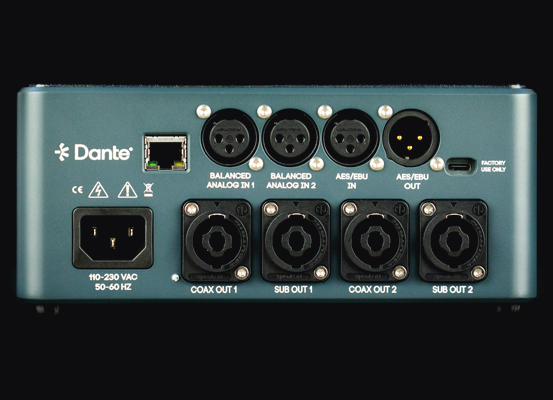
Selene + Poseidon isn’t two separate products sharing a room – it’s a unified 3-way system designed from the ground up to work as one. The EXCore module powers both the Selene coaxial monitors and Poseidon subwoofers, applying coordinated DSP calibration across all four drivers (two coaxials, two subwoofers). What looks like a modular system operates with the precision and coherence of an integrated design.
This generation introduces living calibration – individual driver level corrections that improve over time as our measurement capabilities and algorithms advance. Your system gets better as we get better.
Selene Cabinet Engineering
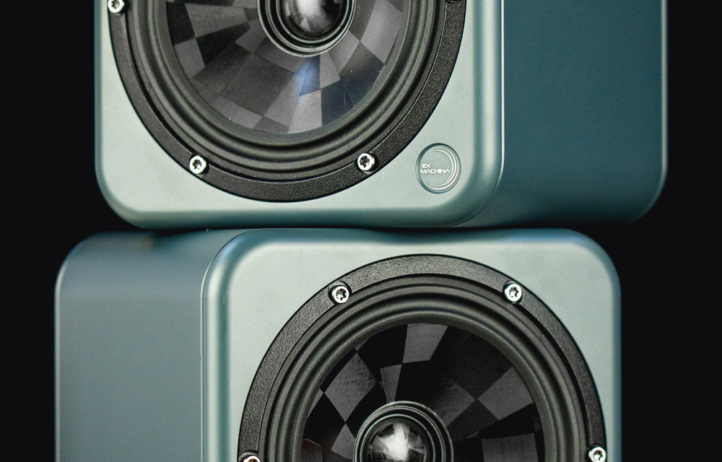
Selene uses the same aluminum extrusion approach as Terra, just scaled for its compact form factor. Each cabinet is a 7mm flat-wall extrusion with 19mm corner ribbing and integral cross-bracing. Both the front and rear baffles are 12mm solid aluminum, compressed onto the main shell with series gaskets, creating a sandwich assembly that’s clamped together for maximum rigidity.
The entire assembly extrudes front to back, allowing us to compress everything together with substantial force. The result is a cabinet that’s acoustically inert despite its compact size – no resonances, no flexing, nothing that colors what you’re hearing.
Like Terra, it’s not about being small or exotic. It’s about ensuring the cabinet disappears acoustically, regardless of physical dimensions.
Selene Driver Technology & Passive Crossover
Selene uses a 16cm variant of our third-generation coaxial midrange/tweeter architecture. It shares the same motor structure as Terra’s 18cm coax, but the 16cm version is purpose-designed for Selene’s application – slightly longer throw, slightly smaller diaphragm, optimized to work as a standalone surround monitor. Custom TPCD diaphragms, FEA-optimized motor structure, automated fiber placement pushing tweeter breakup above 40kHz, with DSP limiting high-frequency extension to 30kHz for optimal performance.
The challenge with the Selene + Poseidon system was architectural: we needed to power two coaxial monitors and two subwoofers from a single EXCore module with four amplifier channels. That meant using a passive crossover inside each Selene coaxial to split the midrange and tweeter at 3kHz, rather than giving each element its own amplifier channel – something we typically avoid.
So we over-engineered it. Custom 14AWG square-wire inductors with exact impedance matching at the 3kHz crossover point to eliminate the need for zobel networks. End-to-end DCR under 0.3 ohms. Identical filter bank values on both sides, counter-wound to achieve roughly 100dB of magnetic field cancellation. Four 3% tolerance Panasonic polypropylene caps per filter bank in parallel for exceptionally low ESL/ESR. Custom 3D-printed gyroid isolator mounts that prevent ringing and absorb shock.
This passive LR2 crossover is analog – analog necessarily introduces phase shift, so it cannot be zero-phase. But the 16cm driver is small enough that beaming doesn’t start until 4kHz on the midrange, and at LR2 we can phase invert the tweeter to achieve perfect phase tracking. The result is a passive crossover so consistent that the DSP can treat the coaxial effectively as a full-range driver. Unlike typical passive crossovers that tank your damping factor, the extremely low DCR maintains control and precision.
Both Selene coaxials are still measured individually and linearized at the driver level before crossover application, just like Terra. The EXCore DSP then integrates Poseidon via zero-phase LR4 crossover at 150Hz.